


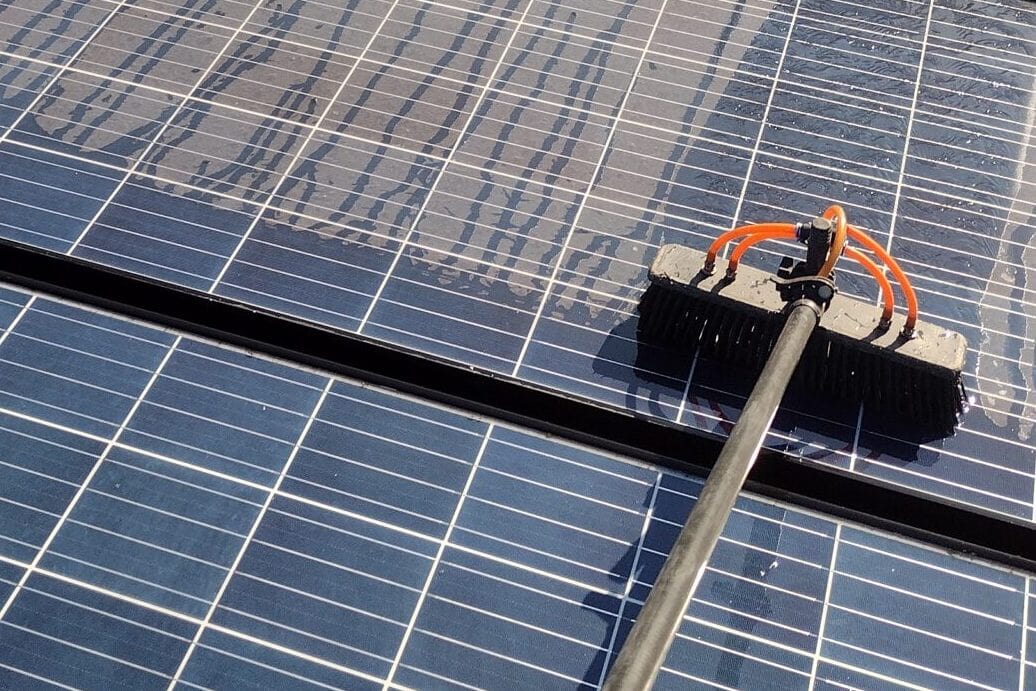
Storm season hits solar systems harder than most homeowners realize. In North Texas, heavy rain, hail, dust, and wind can leave panels covered with debris that blocks sunlight and reduces production. Many homeowners assume rain “washes” their panels for free — but in reality, storms leave behind residue that actually worsens performance.
If you’ve noticed your bill go up or your monitoring app dip after a storm, cleaning is one of the simplest ways to restore power. This blog breaks down why storm-season cleaning matters, what it removes, and how it supports your long-term solar performance.
How Storms Affect Solar Panels in Texas
Texas weather doesn’t just wet the panels — it stacks layer after layer of buildup that reduces efficiency. After storms, homeowners typically see:
• Heavy dust and pollen buildup
Rain pushes dust into clumps and dries it onto the glass.
• Roof granules washed down from shingles
These granules scatter across solar panels and block sunlight.
• Mud residue left behind after rainfall
The first post-storm sun dries mud into a light brown film.
• Tree debris and leaves stuck in the array
This reduces airflow and increases panel temperature.
Everything above leads to one thing: lower solar production.
When your panels can’t get full sunlight, your monitoring app shows dips — especially during midday when you normally expect strong numbers.
Why Solar Panel Cleaning Improves Post-Storm Performance
After storms, professional cleaning restores the system by:
✔ Removing dirt and mud that block sunlight
This immediately improves voltage output.
✔ Clearing roof granules that cause micro-shading
Even small granules drop efficiency across the entire array.
✔ Preventing overheating
Buildup traps heat and forces optimizers to throttle output.
✔ Helping inverters run more efficiently
When the panels work better, the whole system stabilizes.
✔ Reducing long-term degradation
Clean panels run cooler and last longer.
Cleaning is one of the fastest, most affordable ways to get production back on track after rough weather.
What Cleaning Removes That Rain Can’t
Many homeowners believe rain washes everything away — but ask any solar technician, and you’ll hear the same thing:
Rain does not clean solar panels. It makes them dirtier.
Here’s why:
▪ Rainwater contains minerals
These leave behind spots that scatter sunlight.
▪ Dust becomes mud, mud becomes film
The film does not wash off naturally.
▪ Pollen hardens into a yellow layer
This is extremely common in DFW spring seasons.
▪ Roof granules remain stuck
Rain moves granules — it doesn’t remove them.
▪ Leaves and debris get trapped under the array
They can clog drainage and reduce airflow.
This is why panel cleaning after storms is not optional — it’s necessary to keep your system healthy.
Why Panel Cleaning Supports Sunaura Solar’s Core Services
This topic directly supports your service offerings:
Solar Panel Cleaning
Removes storm debris, mud, roof granules, and buildup.
Solar Maintenance
If the storm caused performance dips or errors, cleaning and diagnostics work together to restore full output.
Solar Repair & Diagnostics
If a drop in production continues after cleaning, a deeper inspection checks for microcracks, wiring issues, or optimizer failure.
Solar Detach & Reset
If storms caused roof damage, the system must be safely removed before roofers begin repairs.
With Texas weather, these services work hand-in-hand to keep your system running safely and efficiently.
How to Know You Need Cleaning After a Storm
Look for these signs:
- monitoring app shows lower numbers
- production curve looks uneven
- visible dust or film on panels
- roof granules visible on glass
- inverter shuts off midday
- one string performing lower than the others
- monthly bill increased suddenly
If you notice more than one of these, a cleaning is overdue.