


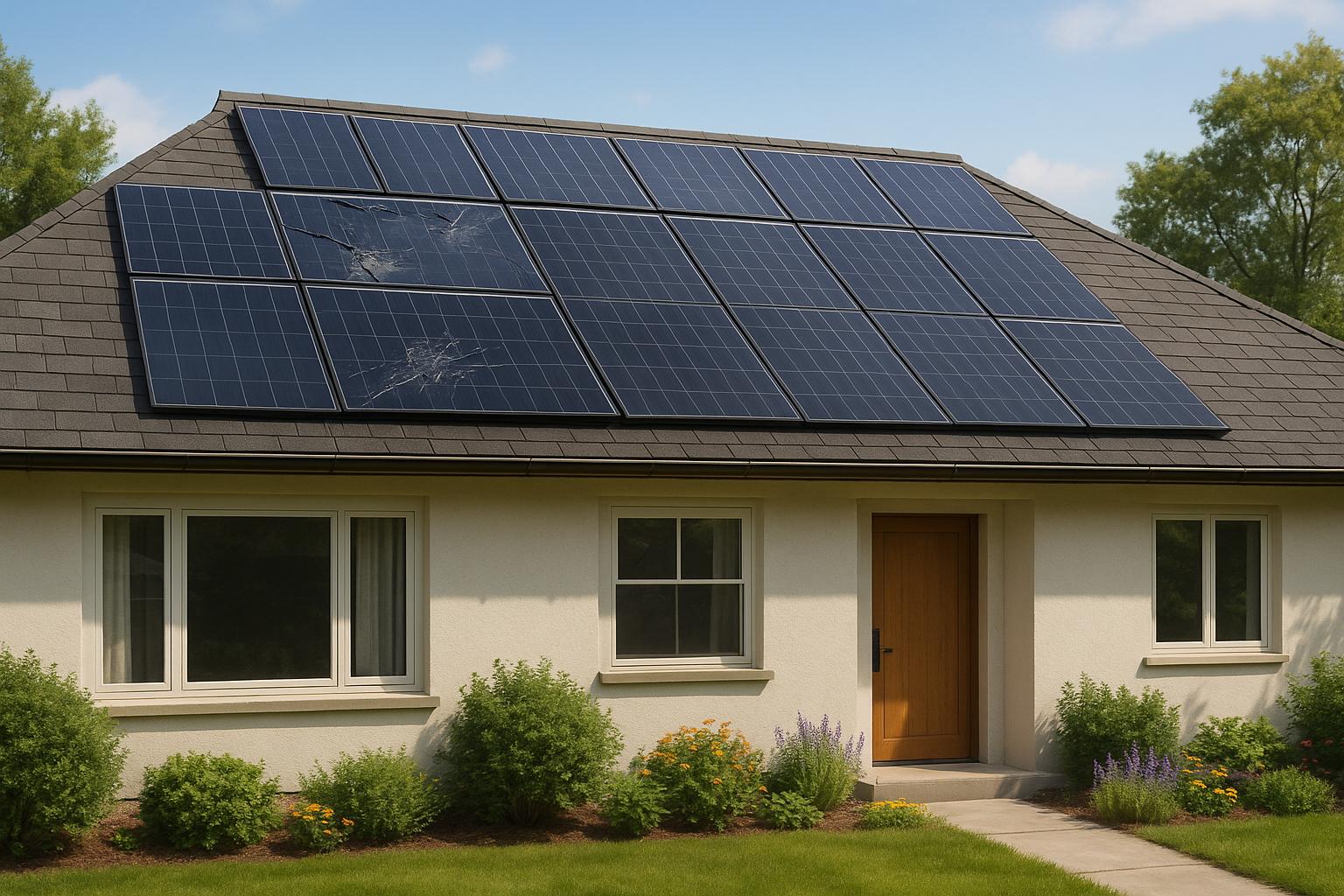
A roof replacement should improve your home — not create problems with your solar system. But for many Texas homeowners, the first sign of trouble after getting a new roof is a sudden drop in solar production, weird monitoring behavior, or panels that no longer power up the way they used to.
This happens more often than people realize. Solar systems are delicate electrical structures, and when panels are not removed and reinstalled properly, homeowners end up with performance issues, wiring damage, or even roof leaks.
This blog explains the hidden solar problems homeowners experience after roof work and how a proper solar detach & reset protects your system from damage.
1. Roofing Crews Are Not Solar Technicians
One of the biggest issues is that roofing teams are not trained to work with electrical solar equipment.
When panels are moved by non-electricians, problems appear later, such as:
- disconnected wiring
- broken MC4 connectors
- misplaced optimizers
- bent rails
- damaged conduit
- poor airflow under panels
Even small mistakes can lead to major production loss or safety issues.
2. Loose or Damaged Wiring Under the Panels
During a roof tear-off, wiring often gets pulled, tugged, or pinched without anyone noticing. Once the panels go back up, homeowners see:
- missing monitoring data
- one or more dead panels
- uneven strings
- afternoon voltage drops
- full system shutdowns
Because wiring sits under the panels, these problems can’t be seen without taking the array back off.
3. Flashings Are Not Reinstalled Correctly
Flashing protects your roof from leaks, especially where solar rails are attached. When roofers reinstall the panels themselves, flashings are often:
- placed incorrectly
- doubled up
- cracked
- missing entirely
- sealed with the wrong materials
This creates early roof leaks that may not show up until months later.
Proper detach & reset includes verified, code-compliant flashing replacement before panels go back up.
4. Microcracks From Panel Handling
Solar panels are more fragile than they look. Bending, dropping, or even applying uneven pressure while lifting can cause microcracks.
Microcracks lead to:
- lower voltage
- hotspots
- rapid degradation
- sudden dips in production
A technician can use diagnostics to check if any panels were damaged during the roof replacement.
5. Incorrect Panel Placement After the Roof Is Done
Panels must be reinstalled at the correct spacing, angle, and airflow clearance. When placed incorrectly:
- airflow gets restricted
- panels overheat
- strings become imbalanced
- inverter strains to compensate
Homeowners often see afternoon production drops after roof work for this exact reason.
6. Optimizers Not Connected or Mapped Correctly
Each panel has an optimizer that must be mapped in the correct order. After roofing:
- panels may be plugged into the wrong positions
- optimizers may be swapped
- some may be left disconnected
- monitoring may show panels in incorrect locations
This causes strange production graphs and inaccurate monitoring.
A proper maintenance visit includes string mapping and optimizer verification.
7. Storm-Season Roof Work Adds More Risk
If the roof was replaced because of hail or storm damage, the solar system likely has:
- internal cracks
- lifted rails
- stressed wiring
- water intrusion
- damaged clips
A post-roof diagnostic ensures the system wasn’t harmed during removal or installation.
Why a Professional Detach & Reset Prevents All of This
A code-compliant detach & reset from licensed electricians ensures:
✔ Safe panel removal
No connector or optimizer damage.
✔ Verified flashings
Replaced as needed and installed correctly.
✔ Clean wire routing
No sagging, pinching, or roof friction.
✔ Fresh hardware where required
Including clips, bolts, rails, and sealants.
✔ Proper reinstallation
Correct spacing, airflow, and attachment.
✔ System commissioning
Technicians verify production on your monitoring app before leaving.
This is why roofing contractors rely on specialists like Sunaura Solar — it protects both the roof and the solar system.