
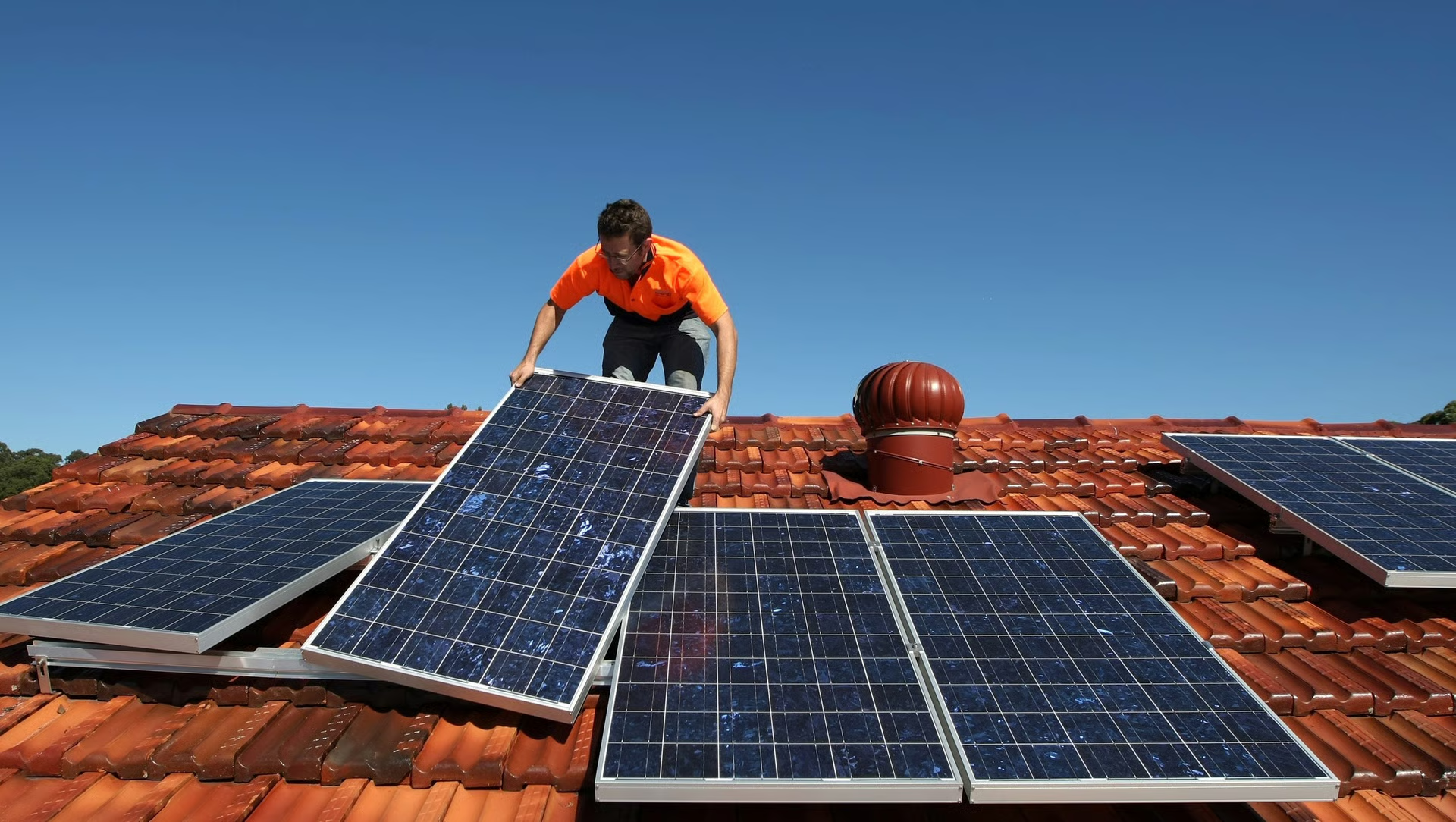
Texas heat is no joke — especially for rooftop solar systems. Many homeowners notice the same confusing pattern every summer: their solar system runs great in the morning, then suddenly drops in the afternoon when the sun is strongest. If your monitoring app shows dips, flat lines, or hours of missing production, your system may be shutting down due to extreme heat.
The good news? This issue is extremely common in DFW, and it’s usually fixable with proper solar maintenance, diagnostics, or wiring repairs. This blog explains why heat-related shutdowns happen and how homeowners can prevent them to protect long-term performance.
1. Your Panels Are Overheating
Solar panels don’t perform well when they get too hot. On a 100°F Texas day, your roof can hit 150–170°F, causing panels to overheat and lose voltage.
When panels overheat:
- voltage drops
- efficiency decreases
- production curves flatten
- optimizers throttle output to protect the system
If the temperature spike is severe, your system may shut off entirely to prevent electrical damage.
2. Inverter Overheating or Derating
The inverter is the hardest-working component of the system, and Texas heat can push it over its limit. When the inverter overheats, it automatically “derates,” meaning it reduces output to cool itself down.
Signs of inverter overheating:
- production drops only in the afternoon
- inverter buzzing or running loudly
- error messages during peak hours
- missing data from 2–6 PM
If derating continues, the inverter may start shutting off entirely.
3. Dirty Panels Make Overheating Worse
Dust, pollen, and roof granules act like a blanket trapping heat on your panels. After storms, Texas panels commonly get covered in:
- mud residue
- pollen film
- dust layers
- shingle granules
Dirty panels get significantly hotter than clean ones, accelerating shutdowns and voltage drops.
A professional cleaning can immediately improve performance and reduce afternoon shutdowns.
Supports services: Panel Cleaning, Solar Maintenance
4. Bad Wiring or Loose Connectors Overheat Under Load
When wiring is loose, corroded, or damaged, it heats up faster. Storms, roof movement, and UV exposure all affect wiring over time.
Common wiring issues include:
- loose MC4 connectors
- wire insulation cracked from heat
- wires rubbing on shingles
- damaged optimizer wiring
During peak heat, these problems cause voltage irregularities or full shutdown.
A technician needs to check wiring at the roof level to identify the weak point.
5. One Failing Optimizer Can Drag Down a Whole String
Optimizers sit behind each panel and regulate performance. In Texas heat, they are one of the first components to fail.
Symptoms of a failing optimizer:
- one panel producing significantly less
- jagged production graphs
- system shutting down during peak hours
- random voltage drops
If even one optimizer overheats, the entire string may shut off to protect itself.
Supports services: Solar Maintenance, Repair & Diagnostics
6. High Grid Voltage Forces the System to Shut Down
This is a hidden issue most homeowners never hear about.
On hot afternoons, neighborhood voltage rises because everyone is running air conditioning. When grid voltage gets too high, your inverter shuts down automatically to comply with safety codes.
This results in:
- sudden shutdowns at the same time every day
- production dips even on clear, sunny days
- inverter errors like “overvoltage”
A technician can adjust settings, add equipment, or stabilize wiring to reduce voltage trips.
7. Storm Damage Weakens Panels and Makes Heat Issues Worse
Even if panels look fine after a storm, small damage can affect heat performance:
- microcracks trap heat
- loose frames reduce airflow
- lifted flashing allows heat pockets
- water intrusion causes hot spots
These issues show up months later — often during hot season.
A storm-damage diagnostic catches these problems early.
How to Fix Heat-Related Solar Shutdowns
Sunaura Solar restores full production by providing:
✔ Solar maintenance
Deep diagnostics to test each component under load.
✔ Solar panel cleaning
Reduces heat trapping and improves voltage output.
✔ Wiring inspection and repair
Identifies overheating connectors and damaged cables.
✔ Optimizer testing
Replaces any failing panel-level electronics.
✔ Inverter evaluation
Checks for overheating, fan issues, or firmware faults.
✔ Detach & Reset
If the array needs rewiring underneath, panels are removed safely and reinstalled to code.
These services fix both the symptoms and the root cause of shutdowns.